CORE ENGINEERING FOCUS / INFRASTRUCTURE PLANNING

Commercial EV Charging Infrastructure
& Turnkey Site Deployment

A responsible charging project starts with use case, electrical readiness, access, ownership, and operational support — not an unsupported speed or availability promise.

LIVE SPECIFICATIONS & GOVERNANCE
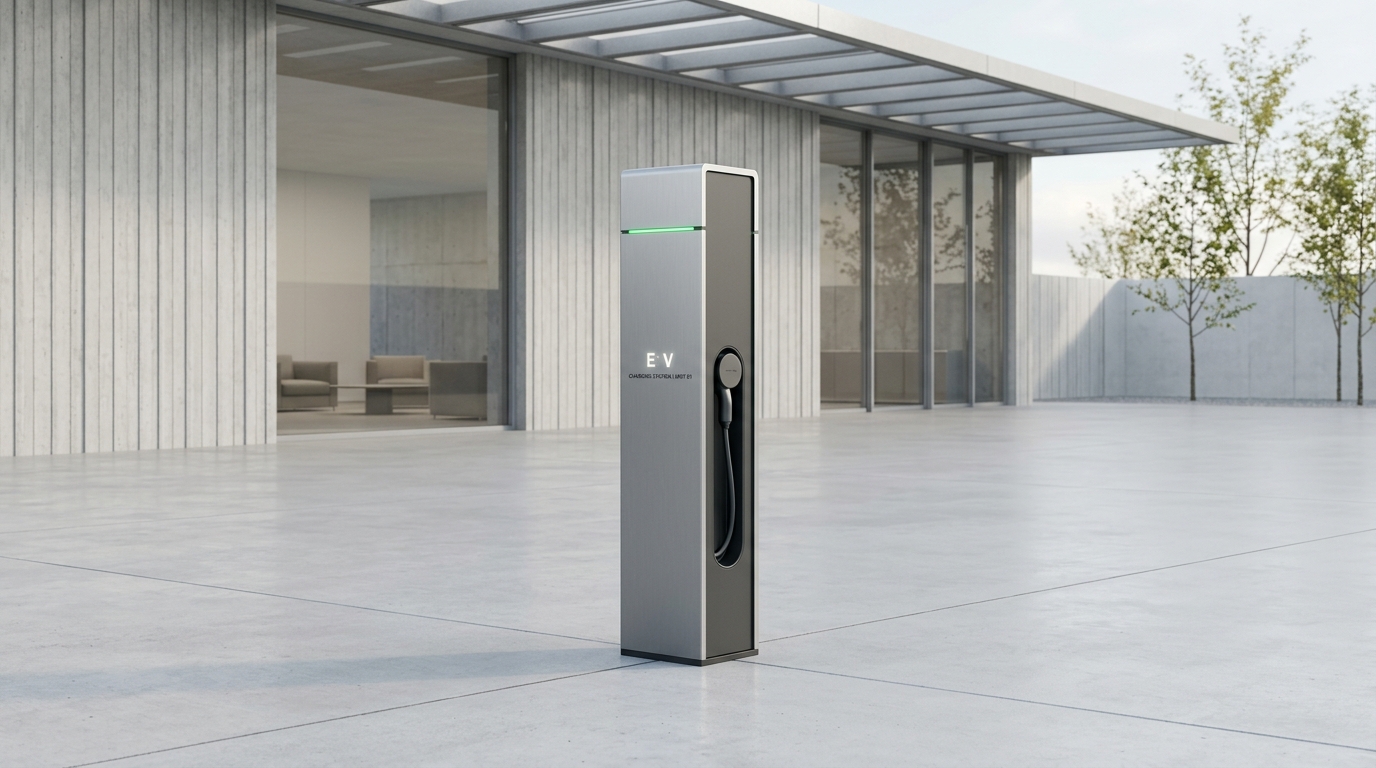
FIG. 01 / EV INFRA
DISPENSER POWER60kW–240kW Dual CCS2 DC
OPEN PROTOCOLOCPP 1.6J / 2.0.1 Ready
LOAD CONTROLDynamic Peak Shaving (DLM)
SAFETY RATINGIS 17017 / IEC 61851 Compliant
01 / TECHNICAL FOUNDATIONS

Four Pillars of Site-First EV Infrastructure

Every successful charging project is built on electrical reality, not speculative hardware claims.

1. Grid Load & Transformer Sizing

Assessing available kVA spare capacity, 3-phase LT balance, and peak domestic vs charging concurrency to prevent transformer failure.

2. AC vs DC Charging Topology

Matching power rating (7.4 kW AC to 120 kW+ DC) precisely to vehicle dwell time profiles — eliminating wasted capital on oversized chargers.

3. Civil Routing & Parking Layout

Optimizing trenching routes, cable sizing, earthing pits (<5Ω), collision protection bollards, and ADA-compliant bay dimensions.

4. Open OCPP Governance & Sub-Metering

Enforcing open standards (OCPP 1.6J/2.0.1) for transparent resident sub-metering, RFID access control, and dynamic peak-load management.

02 / BUYER CONTEXT MATRIX

Tailored Infrastructure for Every Site Environment

Select your operational setting below to inspect site prerequisites, challenges, and implementation paths.

Residential EV Charging
Private Residences & Independent Homes

Residential EV Charging

Start Site Assessment
WHAT IS THE PROBLEM?

Homeowners need safe, overnight charging that does not risk overloading domestic home wiring, tripping circuit breakers, or causing electrical fire hazards.

WHAT DOES THE SITE NEED?

A dedicated 230V single-phase or 415V 3-phase circuit from the main meter board, proper earthing (< 5 ohms), residual current protection (RCD Type B), and weatherproof mounting (IP65).

WHAT DOES NANDEEKA HELP WITH?

We assess domestic power availability, specify appropriate 7.4 kW AC smart chargers with safety interlocks, and design safe cable conduit runs from meter to parking spot.

WHAT SHOULD YOU CONSIDER?

Check sanctioned residential load with the electricity utility and verify if an off-peak time-of-day tariff is available for cheaper overnight charging.

WHAT IS THE NEXT STEP?

Share your sanctioned domestic load and distance between meter board and vehicle parking bay for a site feasibility review.

03 / PLANNING SEQUENCE

Infrastructure follows operating context.

We follow a disciplined 3-step engineering roadmap to eliminate risks before hardware procurement.

Where planning begins

STAGE 01

Where planning begins

Different environments place different demands on access, dwell time, electrical capacity, safety, and operations.

  • Residential and multi-tenant community contexts
  • Workplaces, corporate parks, and commercial locations
  • Fleet logistics depots, destination retail, and highway transit corridors
Site & electrical readiness

STAGE 02

Site & electrical readiness

Assessment must establish transformer headroom, cable sizing, earthing resistance, and who owns each operational responsibility.

  • Transformer kVA capacity and 3-phase electrical headroom
  • Vehicle movement, turning radius, and accessible bay placement
  • Statutory approvals, sub-metering, and dynamic load governance
Delivery path & lifecycle support

STAGE 03

Delivery path & lifecycle support

The implementation sequence remains visible from initial site audit through planning, setup, and operational handover.

  • Define vehicle dwell profiles and power requirements
  • Validate electrical single-line diagrams (SLD) and grid constraints
  • Commission open OCPP-compliant infrastructure with ongoing support boundaries
04 / TECHNICAL QUESTIONS

Frequently Asked EV Infrastructure Questions

Plain engineering answers to common electrical, civil, and governance questions.

MOVE FORWARD WITH CLARITY

Move forward with verified context.

Share your site location and operational goals today. Our assessment will identify the remaining engineering decisions without inventing certainty.

No hardware lock-in Site-specific audit Verified load calculations